Need to get rid of bulky trash in Atlanta? Whether it’s old furniture, appliances, or yard waste, knowing the city’s rules can save you time and hassle. Atlanta offers up to 12 free bulk pickups a year, but missing the details - like item limits or staging guidelines - can lead to missed collections or fines.
For faster service, WasteMatch connects you with local haulers for on-demand pickups, including same-day options and upfront pricing.
Here’s what you’ll learn:
- What qualifies as bulk trash in Atlanta
- How to sort, measure, and stage items for pickup
- Tips for avoiding extra fees and restricted items
Let’s make your next bulk pickup smooth and stress-free.
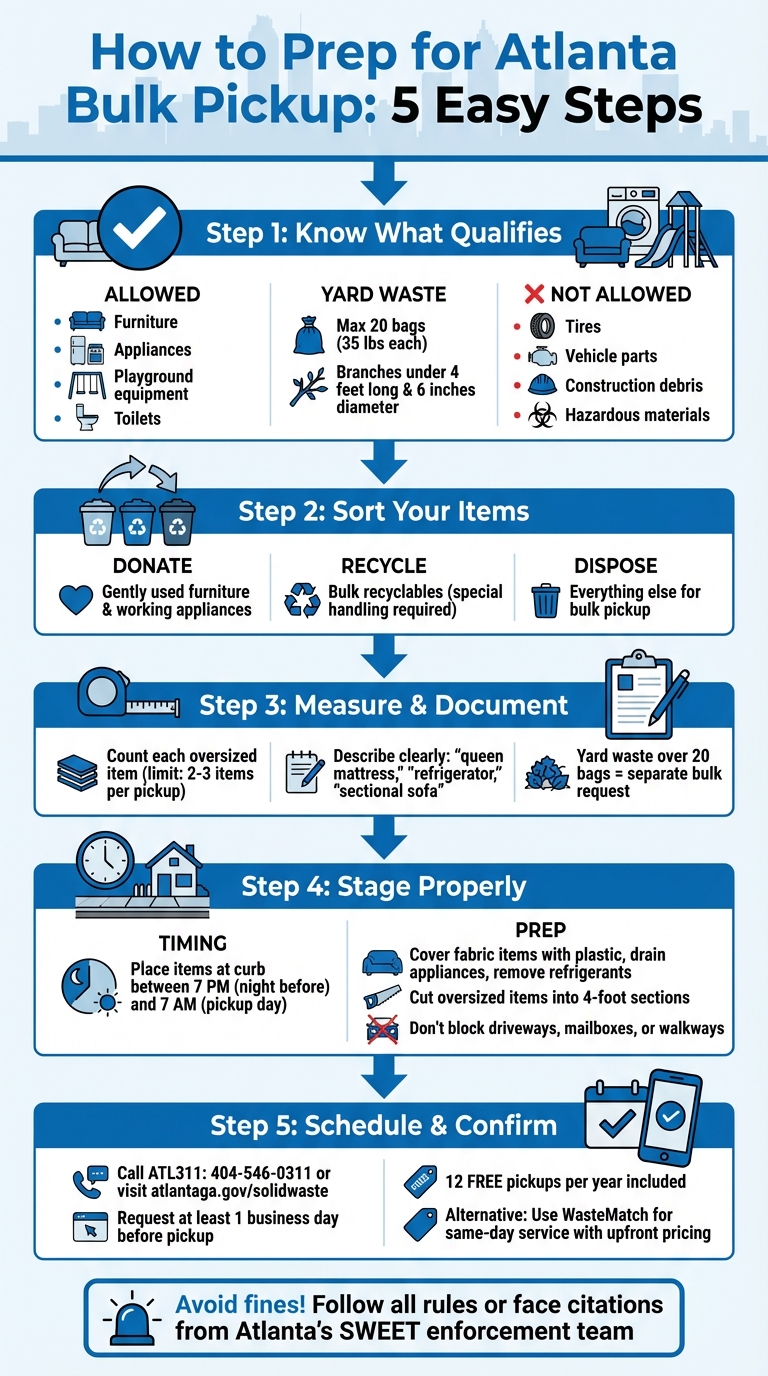
Atlanta Bulk Pickup Preparation Guide: 5 Steps to Hassle-Free Collection
Atlanta's Bulk Pickup Rules
What Qualifies as Bulk Trash
In Atlanta, bulk trash refers to items that are too large or heavy for regular curbside collection. This includes household appliances like washers, dryers, and refrigerators, as well as furniture such as couches, mattresses, and tables. Larger items like playground equipment and toilets also fall into this category.
Yard waste can qualify as bulk trash if it exceeds the capacity of 20 paper bags. This includes leaves, grass clippings, brush, and similar materials. However, branches must be trimmed to under 4 feet in length and no wider than 6 inches in diameter to be eligible for collection.
Certain items, however, are excluded from bulk pickup. These include tires, vehicle parts, construction debris (such as sheetrock, metal, or concrete), and hazardous materials like chemicals, batteries, and medical waste. Hazardous items require special handling and often need to be taken to the Center for Hard to Recycle Materials by appointment.
Be sure to check the city's specific guidelines for scheduling and placing bulk items for collection.
City of Atlanta Requirements
To schedule a bulk pickup, contact ATL311 at 404-546-0311 or visit atlantaga.gov/solidwaste. Requests must be made at least one business day before your desired pickup date.
Place bulk items at the curb no earlier than 7 p.m. on the evening before your scheduled collection day. For yard trimmings, use paper bags or reusable containers no larger than 32 gallons. These containers must be clearly labeled "YARD TRIMMINGS" on all four sides. Bags should not weigh more than 35 pounds when full. The city allows up to 20 bags per collection; anything beyond that will be treated as bulk trash and requires a separate pickup request.
Failure to follow these rules may result in missed pickups or even citations. Proper preparation ensures a smooth and efficient process.
How to Sort and Stage Your Items
Sort by Category: Donation, Recycling, or Disposal
Before arranging a bulk pickup, start by dividing your items into three groups: donation, recycling, and disposal. If you have items in good shape - like gently used furniture, functioning appliances, or household goods - consider donating them. Many organizations in Atlanta even offer free pickup for large donations, which can save you money while supporting the community.
Next, figure out what can be recycled. While Atlanta provides weekly curbside recycling for common items, bulk recyclables need special attention. When organizing your items, keep landfill-bound materials separate from those that can be recycled. Anything that can't be donated or recycled should go on your bulk pickup list.
Measure and Describe Your Load
Once sorted, take the time to document everything accurately. Atlanta’s bulk pickup service counts each oversized item individually. Typically, the city allows for two or three oversized items per collection. Be precise when listing your items - use clear descriptions like "queen mattress", "refrigerator", or "sectional sofa."
For yard waste, pay attention to size and weight limits. Branches over 4 feet long or 6 inches thick are considered bulk items. If you’ve bagged yard trimmings, make sure each bag weighs 35 pounds or less. If you have more than 20 bags, you’ll need to make a separate bulk pickup request.
Providing detailed item descriptions makes scheduling your pickup with WasteMatch much smoother.
Stage Items for Pickup
After sorting and listing, it’s time to stage your items for collection. Place bulk items at the curb between 7 p.m. the evening before and 7 a.m. on the pickup day. This timing ensures sidewalks stay clear and helps you avoid citations. Arrange items so they’re easy to access but don’t block driveways, mailboxes, or pedestrian paths.
Follow Atlanta’s specific staging rules to avoid issues. Cover fabric items like mattresses and sofas with plastic. Drain water from appliances and ensure refrigerants are removed from refrigerators and freezers by a technician. For oversized items like poles, playground equipment, or railroad ties, cut them into four-foot sections. Proper staging keeps the process hassle-free.
ATL311: How to Schedule a Bulk Collection #EasyWithATL311 #BulkPickupATL
Special Handling and Extra Fees
Knowing which items are restricted and understanding potential extra fees can help make your WasteMatch bulk pickup hassle-free.
Restricted Items and Hazardous Waste
Certain items are off-limits for Atlanta's curbside bulk pickup. These include tires, vehicle parts, and construction debris such as sheetrock, metal, and concrete. These materials need to be disposed of through alternative methods.
Items labeled as toxic, corrosive, flammable, or irritant - like chemicals and non-alkaline batteries - shouldn't be mixed with your bulk trash. For these, you can schedule an appointment with the Center for Hard to Recycle Materials (CHaRM). They also handle items like CFL bulbs, cooking oil, electronics, large appliances, TVs, flat glass, box springs, mattresses with springs, and paint. For electronics, certified recyclers such as Ecycle Atlanta, Intonu Recycling, or Atlanta Green Recycling can ensure they’re dealt with correctly.
Additionally, Atlanta Recycles Day is held every third Saturday of the month from 9 a.m. to 12 p.m. at 2841 Greenbriar Pkwy SW. This event allows you to drop off electronics and tires free of charge. For scrap metal, you can visit specialized recycling facilities like M&M Recycling, SA Recycling, or Intonu Recycling.
Keep in mind, handling these non-standard items or exceeding service limits may lead to extra charges.
Extra Costs to Expect
While some bulk pickups are covered under Atlanta’s Solid Waste Fee, exceeding certain limits can result in additional expenses.
Residents are allotted 12 bulk collections per year as part of the Solid Waste Fee. If you go over the limit - typically two to three oversized items per pickup - you may need to schedule extra collections, which come with additional fees.
Yard waste also has its own limits. If you exceed 20 bags or include stumps and large branches, a separate bulk pickup will be required. For larger quantities, you can bring yard waste to Hartsfield Landfill at 2175 James Jackson Parkway. Items like up to 10 tires, electronics, scrap metal, paint, and oil can be taken to Seminole Road Landfill.
Reviewing these details ahead of time ensures you're prepared for any restrictions or extra costs when pickup day arrives.
sbb-itb-c7714ed
Scheduling Your Bulk Pickup with WasteMatch
Once you've sorted through your items and confirmed what's allowed, setting up a pickup with WasteMatch is straightforward. The platform connects you with local haulers in Atlanta, offering clear pricing and flexible scheduling options. Whether you need same-day service or prefer to book in advance, WasteMatch makes it easy.
What You Need to Book
Before booking, there are a few things to prepare. Start by taking clear photos of the items you need removed. These photos help haulers provide accurate quotes and avoid any surprises. As experts suggest, clear pictures are key to ensuring accurate assessments.
For larger items, measure their dimensions so you can describe them precisely. Also, have your location details handy, along with any special instructions, like gate codes or notes about narrow driveways. The more accurate your information, the smoother the scheduling process will be.
Why Use WasteMatch
Once you're ready, WasteMatch simplifies the entire process. The platform offers upfront pricing and flexible scheduling, so you can book a pickup that fits your timeline. Need it done today? No problem. Want to plan for later? That works too. Payments are secure, and you only pay after the job is completed.
But it's not just about convenience. WasteMatch ensures that items are disposed of responsibly. Anything that can be donated or recycled is diverted from landfills, supporting Atlanta's waste management efforts. Whether you're a homeowner clearing out a garage or a property manager handling a move-out, WasteMatch takes care of the logistics. You just point and click, and they handle the rest.
Pickup Day Checklist
With your WasteMatch booking all set, here’s a handy checklist to keep your pickup day running smoothly and free of unnecessary hiccups.
Confirm Arrival Time and Ensure Clear Access
Start by double-checking your pickup window. Most haulers in Atlanta operate within a specific timeframe, so review your booking confirmation to know when to expect them. If you live in a gated community or an apartment complex, give your property manager or front desk a heads-up in advance to avoid any access issues.
Take a moment to inspect the pickup area. Make sure all items are clearly visible at the curb and not blocked by other objects. Items should meet Atlanta’s timing rules for curb placement. Haulers need enough room to work, especially when moving bulky furniture or heavy appliances, so clear any pathways to make their job easier.
Plan for Weather and Ensure Safety
Atlanta’s weather can be unpredictable, particularly in spring and summer when sudden afternoon storms are common. To protect fabric items, cover them with plastic sheeting or bags to keep them dry. For appliances or items that can hold water - like dishwashers, hot water heaters, or toilets - be sure they’re completely drained before the crew arrives.
Safety is key, not just for the haulers but for everyone in the area. Once you've addressed weather and safety precautions, do a final walkthrough of the pickup spot to ensure everything is ready.
Wrap Up After the Pickup
When the haulers finish loading everything and leave, take a quick look at the pickup area to check for any missed items or leftover debris. While it’s uncommon, large or mixed loads can sometimes result in something being overlooked. If that happens, reach out to WasteMatch support right away to get it sorted.
Lastly, if you moved your trash or recycling carts to make room for the pickup, return them to their usual storage spot. Don’t forget to follow Atlanta’s rules for cart placement and removal after pickup. These final steps help ensure your pickup day wraps up without a hitch.
Conclusion
Handling bulk trash pickup in Atlanta doesn’t have to be a headache if you follow a few straightforward steps. Start by knowing what qualifies as bulk trash, sorting your items accordingly, and placing everything at the curb after 7 p.m. the night before your scheduled pickup. Don’t forget to schedule your pickup in advance, as Atlanta offers a limited number of free collections. These simple preparations can make pickup day smooth and stress-free.
Skipping these steps or disregarding Atlanta's rules can lead to fines and delays. The City of Atlanta's Solid Waste Education Enforcement Team (SWEET) is vigilant about enforcing these regulations across all Neighborhood Planning Units.
If you’re looking for an alternative, WasteMatch connects you with dependable haulers who provide clear pricing and timely service. With WasteMatch, you’ll know the cost upfront and can book a pickup that suits your schedule - no need to rely on the city’s timeline.
Whether you stick with the city’s free service or opt for WasteMatch for added convenience, planning ahead is key. Properly sorting your items, checking for restricted materials, and staging everything correctly can save you time, money, and the hassle of fines.
FAQs
What items can’t be collected during Atlanta’s bulk pickup service?
When using Atlanta’s bulk pickup service, keep in mind that certain items are not accepted. These include:
- Business or manufacturing waste
- Construction and demolition debris
- Hazardous materials like asbestos or lead-based paint
- Household hazardous waste, such as chemicals or batteries
- Contaminated materials
- Appliances with refrigerants, unless the refrigerant has been removed and the appliance is tagged by a certified technician
Make sure to check the city’s guidelines carefully. Following these rules can help you avoid fines and ensure your items are eligible for collection.
What steps can I take to avoid extra charges when scheduling a bulk pickup in Atlanta?
To steer clear of extra fees, be sure to schedule your bulk pickup at least a day ahead of time. Set your items out at the curb after 7 p.m. the night before your scheduled pickup. Keep in mind that the total load must stay within the 8 cubic yard limit. Putting items out too early or going over the size limit could lead to additional charges. Stick to these steps to keep the process straightforward and budget-friendly.
What should I do if my bulk pickup wasn’t collected as planned?
If your bulk pickup items weren’t collected as planned, contact ATL311 by calling 404-546-0311 or submit a service request online through the city’s Office of Solid Waste Services. Make sure to report the issue and set up a new pickup date.
To help avoid any delays, double-check that your items were placed curbside after 7:00 p.m. the evening before your scheduled pickup and that they comply with the city’s bulk waste collection guidelines.