Leaving junk on the curb in Atlanta isn’t just an eyesore - it can cost you up to $1,000 per day in fines. And that’s just the start. From attracting pests to lowering property values, improperly discarding items like old furniture or yard debris impacts your wallet and your neighborhood. The city’s strict rules mean even renters can face penalties if waste piles up outside their home.
Here’s what you need to know:
- Atlanta enforces hefty daily fines for illegal dumping, and repeat offenses can lead to even harsher consequences.
- Free bulk pickup services are available through ATL311, but you’ll need to schedule in advance.
- For tricky items like electronics or hazardous waste, CHARM recycling centers are your go-to option.
If dealing with all this feels overwhelming, WasteMatch makes junk removal simple. They handle the heavy lifting and ensure everything is disposed of properly, so you skip the fines and headaches.
What You'll Pay in Fines for Curb Dumping
Atlanta Junk Dumping Fines and Penalties Guide
Atlanta's $1,000 Daily Penalty
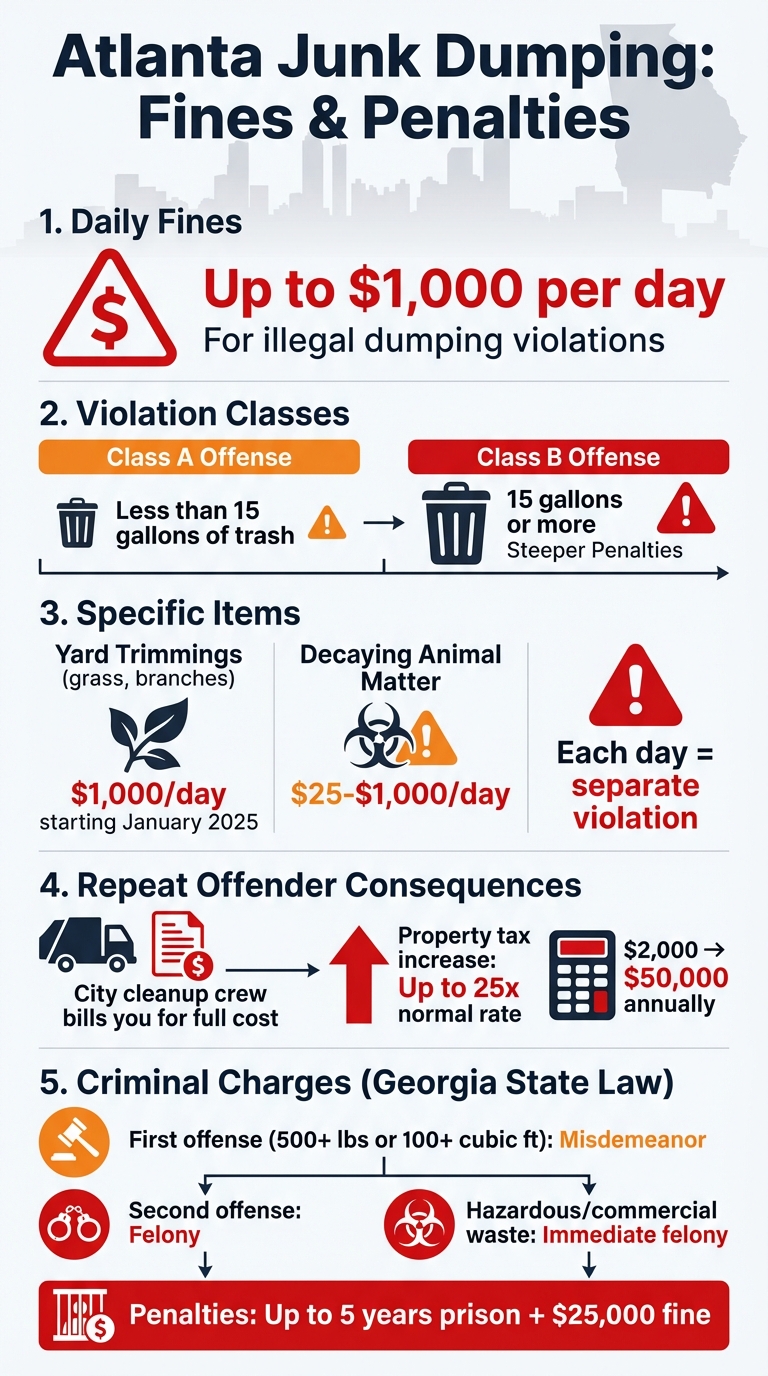
If you're in Atlanta, leaving junk on the curb can cost you big time. The city enforces hefty fines for illegal dumping - up to $1,000 per day for each day your trash stays out there. These fines pile up until the mess is cleaned up, either by you or by the city taking matters into its own hands.
The fine amount depends on how much waste you’ve dumped. According to Atlanta Ordinance Sec. 130-6, violations are classified based on waste volume. Leaving less than 15 gallons of trash is considered a Class A offense, but if you dump 15 gallons or more, it jumps to a Class B offense with steeper penalties. Even a few full trash bags could push you into the higher fine category.
Certain items come with automatic penalties. Starting January 2025, yard trimmings like grass clippings or branches fall under Atlanta's litter ordinance. Dumping these on private or vacant property could land you that $1,000 daily fine. And if you leave decaying animal matter on the curb, fines range from $25 to $1,000 per day, with each day treated as a separate violation.
These fines can quickly escalate, and repeat offenses bring even harsher consequences.
What Happens When You Violate Again
If you’re a repeat offender, the penalties don’t just stop at fines. Ignoring a city notice to clean up your property could lead to Atlanta sending out a cleanup crew. Not only will they handle the mess, but they’ll also bill you for the full cost of labor and disposal.
For property owners, the stakes are even higher. Under updated city ordinances, allowing repeated illegal dumping on your property could lead to your property tax rate skyrocketing - up to 25 times the normal rate. Imagine a $2,000 annual tax bill suddenly ballooning to $50,000 if your property becomes a dumping hotspot.
Renters aren’t off the hook either. Dumping furniture or other large items on the curb could have long-term consequences. A single careless act might leave you with a criminal record, impacting your housing options, job prospects, and financial stability for years to come.
Legal Consequences and Who's Responsible
When Fines Turn Into Criminal Charges
Leaving junk on the curb isn’t just an eyesore - it can have serious legal consequences. In Georgia, dumping more than 500 pounds or 100 cubic feet of non-hazardous waste is considered a misdemeanor for a first offense. However, a second offense automatically escalates to a felony charge.
When it comes to hazardous or commercial waste, the penalties are even harsher. Dumping materials like biomedical waste, asbestos, motor oil, or electronics with toxic components skips the misdemeanor stage entirely and is charged as a felony right away. A felony conviction can result in up to five years in prison and fines as high as $25,000 per violation.
Beyond fines and jail time, offenders are often required to clean up the mess, repair any property damage, or perform community service to restore the affected area. Georgia law also requires that a notice of conviction - including personal details - be published in the county's legal organ at the offender’s expense. If a vehicle was involved in illegal dumping, authorities may impound it as well. These penalties highlight the importance of taking waste disposal seriously to avoid severe legal and financial repercussions.
Who Pays: Landlords or Tenants?
When it comes to improper disposal, the question of who’s responsible - landlords or tenants - can get complicated, especially during property turnovers. Legally, both parties can be held accountable, but cities often start by targeting the property owner. According to Atlanta City Code, neither the owner nor the tenant is allowed to let garbage, debris, or discarded items pile up on a lot. Notices of non-compliance are typically sent to the property owner or their agent [4,2].
This issue often arises during tenant move-outs. For example, if a tenant leaves a mattress or couch on the curb and disappears, the landlord will receive the violation notice. From there, they have 14 days to clear the property or face a minimum fine of $500. If violations occur again at the same address within a year, the fine increases to $1,000. Property owners also bear responsibility for ensuring that any contractors they hire - whether for tree removal, landscaping, or construction - properly dispose of all debris.
To avoid these headaches, landlords should include clear junk disposal policies in lease agreements, and tenants should confirm their responsibilities before moving out. When violations happen, both parties can face penalties, making it clear that proper waste management is not just a courtesy - it’s a legal necessity to avoid steep fines and potential legal troubles.
How Curb Junk Affects Your Neighborhood
Pests, Blight, and Lower Property Values
Improperly disposing of junk doesn’t just lead to fines or legal troubles - it can deeply harm the fabric of a community. When junk is left on the curb, it creates an unattractive mess that drags down property values and places a financial strain on neighborhoods. For instance, a yard filled with discarded items can decrease nearby property values by as much as 10%. In Atlanta, the effects are even more staggering, with illegal dumping in struggling areas costing an estimated $55–$153 million in lost property value and $1–$2.7 million in reduced tax revenue annually.
Beyond the financial toll, curbside junk invites unwanted visitors. Flies, rodents, birds, and other pests are drawn to these piles. Items that collect rainwater become breeding grounds for mosquitoes, while overgrown weeds provide hiding spots for snakes and rats. Areas near unsecured, vacant properties are especially vulnerable, experiencing 3.2 times more drug-related emergency calls and double the rate of violent crime reports.
The ripple effects even touch real estate transactions. Appraisers take note of the condition of nearby properties, and a neighbor’s junk-filled yard can lead to lower appraised values. This can disrupt loan-to-value ratios, potentially derailing mortgage approvals. On the flip side, even small investments in cleanup can make a big difference. Spending $500 to tidy up a neighbor’s yard, for instance, could yield a return of ten times that amount if it increases property values by just 2%. It’s a clear win for everyone in the neighborhood.
While property values and safety are immediate concerns, the broader implications of improper disposal reach into Atlanta’s ecosystem.
Water and Soil Contamination Risks
The environmental consequences of curbside junk go far beyond what meets the eye, posing serious threats to public health and natural resources. Hazardous materials - classified under Atlanta code as substances that are ignitable, corrosive, reactive, or toxic - can seep into the soil and water supply, creating long-term health risks.
Improper disposal of yard debris and trimmings adds to the problem by clogging storm drains. This not only raises the risk of localized flooding but also impedes community development. Chelsea Arkin, Chair of NPU-W, highlighted the issue:
"What we wanted to really be clear about: lawn trimmings being washed down into the drains... it cannot be a concern of a lot of lawn care providers not to care about debris being blown down a drain"
. Atlanta city code explicitly prohibits dumping debris, sawdust, or byproducts from landscaping, tree services, or construction into the city’s sewer system.
The city’s stance on environmental protection couldn’t be clearer:
"It is the stated policy of the City of Atlanta to protect the health, safety and welfare of its residents. Furthermore, the City of Atlanta recognizes environmental protection as a right of the people living within the city"
. Addressing these contamination risks isn’t just about following the rules - it’s about safeguarding Atlanta’s communities and natural resources for generations to come.
sbb-itb-c7714ed
How to Dispose of Junk Properly in Atlanta
Getting rid of junk the right way isn’t just about keeping your space tidy - it’s also about avoiding hefty fines, legal trouble, and potential harm to the environment. Here’s how to handle junk disposal in Atlanta responsibly.
City of Atlanta Bulk Pickup
If you live in a single-family home in Atlanta, you’re entitled to 12 free bulk trash pickups per year, courtesy of the Department of Public Works. This service covers items like furniture (sofas, mattresses, tables), large appliances (refrigerators, washers), oversized yard waste piles (over 20 bags), and some construction debris. Scheduling is easy - just call ATL311 at 404-546-0311, visit the ATL311 website, or use the ATL Solid Waste mobile app. Make sure to schedule at least one business day in advance.
When it’s time for collection, place your items curbside by 7:00 p.m. the night before or by 7:00 a.m. on collection day. To ensure smooth pickup, organize your bulk items and keep them at least 3 feet away from recycling carts, mailboxes, or parked cars. For appliances like refrigerators or air conditioners, you’ll need certification tags to show that freon was professionally removed.
It’s important to know what the service won’t take. Items like tires, hazardous materials (paint, chemicals), and medical waste are not accepted. If you’re unsure about an item, check the city’s "Waste Wizard" tool online before scheduling. Also, remember that major federal holidays, such as Martin Luther King Jr. Day (January 19, 2026), typically delay all collections by one day.
CHARM Recycling Centers
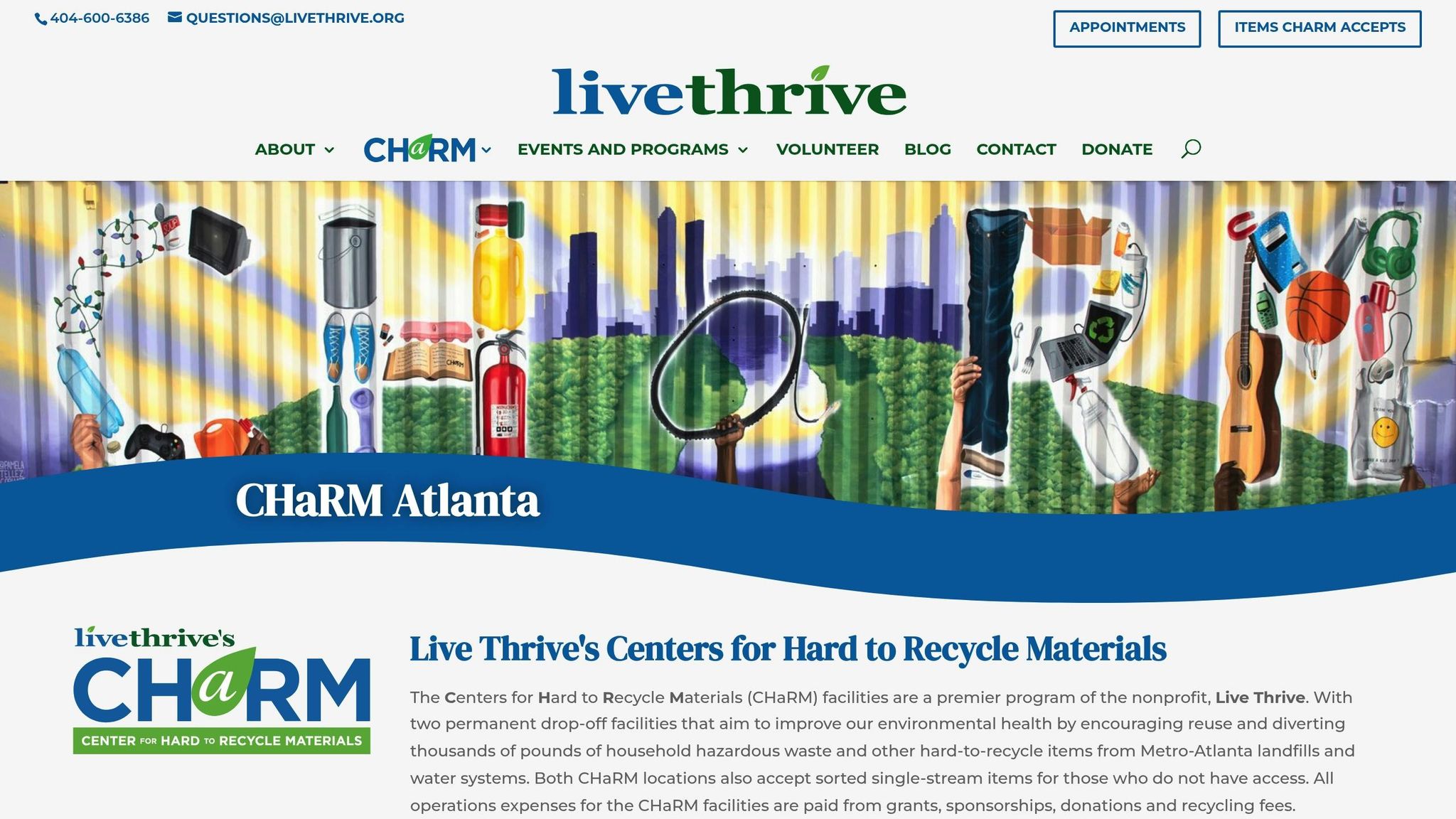
For those hard-to-dispose items that don’t qualify for curbside pickup - like electronics, hazardous waste, batteries, and chemicals - Atlanta’s Center for Hard to Recycle Materials (CHaRM) is an excellent option. Located at 1110 Hills Street SE, Atlanta, GA 30315, CHaRM accepts e-waste (computers, TVs, printers, cables), hazardous materials (motor oil, toxic cleaners, weed killers, fluorescent bulbs), and other tricky items like lamps.
CHaRM operates by appointment only, so call 404-600-6386 to schedule your visit. If you can’t make it to CHaRM, consider taking part in Atlanta Recycles Day, held on the third Saturday of each month (February through December) at Greenbriar Mall. This event allows you to drop off electronics, tires, and documents for shredding.
Where and How to Place Items for Pickup
Proper placement of items is key to ensuring they’re picked up without any issues. For your regular household trash and recycling, use the city-issued green cart (trash) and blue cart (recycling). Place them curbside with the wheels and handles facing away from the street. Keep the lids closed to prevent pests and avoid service interruptions.
If you’re disposing of yard trimmings, use paper bags or reusable containers (up to 32 gallons) clearly marked "Yard Trimmings" on all four sides. Plastic bags are not allowed. You’re limited to 20 paper bags per weekly collection, and each bag must weigh no more than 35 pounds. For branches, keep them under 4 feet long and 6 inches in diameter. Finally, don’t forget to remove your empty carts from the curb by 9:00 a.m. the day after collection to stay in compliance with city rules.
Following these steps not only keeps Atlanta clean but also ensures you stay on the right side of the law while doing your part to maintain a safe and pleasant community.
Reporting Illegal Dumping and Getting Help
How to Report Dumping in Atlanta
If you notice illegal dumping in your area, acting quickly can help keep Atlanta looking its best and prevent further violations. The go-to resource for reporting dumping on public property - like streets, sidewalks, or city-owned spaces - is ATL311. You can reach them by calling 404-546-0311, emailing ATL311@Atlantaga.gov, or visiting www.atl311.com. Their services are available Monday through Friday, from 7:00 a.m. to midnight.
When reporting, make sure to provide the exact location and a description of the dumped items, such as furniture, appliances, or construction debris. If the debris is blocking traffic or creating a safety hazard, be sure to highlight that as well. The Department of Public Works is responsible for cleaning up public areas, while the Atlanta Police Department Code Enforcement handles violations on private property. For private property concerns, you can contact them at 404-330-6190. Additionally, the Solid Waste Education Enforcement Team (SWEET) ensures compliance with sanitation regulations, including addressing illegal dumping under Ordinance 130-84.
Reporting is an important step in tackling illegal dumping, but finding proactive ways to manage waste can help prevent these problems in the first place.
How WasteMatch Makes Junk Removal Easy

If you're looking for a hassle-free way to get rid of junk without worrying about fines or city pickup schedules, WasteMatch offers a quick and reliable solution. Whether you're moving out of a rental or clearing out your home, WasteMatch connects you with local haulers who handle the job responsibly. Booking is simple - just go online, pick a pickup time that works for you, and let a professional take care of the rest. Plus, you'll know the cost upfront, so there are no unexpected charges.
For $129 a year, a WasteMatch Home membership includes one free pickup (up to a $250 value), priority scheduling during busy times, and clear, upfront pricing with no hidden fees. It’s a stress-free option for dealing with unwanted items while staying within city guidelines and avoiding potential penalties.
Conclusion
Dumping junk on the curb in Atlanta can come with hefty consequences - financial, legal, and even community-related. The city imposes daily fines of up to $1,000, and improperly discarding hazardous or biomedical waste could result in felony charges. Beyond the legal troubles, leaving junk unattended can attract pests, decrease property values, and potentially lead to contamination that harms the broader community. These issues highlight the importance of proper junk disposal.
Thankfully, Atlanta provides several responsible ways to handle unwanted items. You can schedule bulk pickups through ATL311 or visit CHARM recycling centers for items that are tough to dispose of. Additionally, WasteMatch offers a convenient solution by connecting you with local haulers who provide clear pricing and hassle-free removal, all while ensuring you stay within the city’s guidelines.
FAQs
What happens if someone repeatedly dumps junk illegally in Atlanta?
Repeat offenses of illegal dumping in Atlanta come with much steeper penalties than a first-time violation. While a first offense is usually classified as a misdemeanor - carrying fines of up to $1,000 and a possible jail sentence of up to 60 days - subsequent violations are far more severe. These repeat offenses can be charged as felonies, with fines reaching as high as $25,000 per incident, potential prison time, and mandatory reimbursement for cleanup costs.
Under Georgia law, each repeat offense is treated as a separate violation. This means offenders could also lose waste-transport permits and face long-term legal repercussions. A criminal record from these violations can make finding housing or employment more challenging in the future. Disposing of junk responsibly not only avoids these harsh penalties but also helps keep communities clean and safe.
What is the proper way to dispose of hazardous waste in Atlanta?
In Atlanta, you can’t just leave household hazardous waste (HHW) like paints, batteries, or pesticides out on the curb or toss them in with regular trash. Instead, these items need to be taken to the Center for Hard-to-Recycle Materials (CHaRM), the city’s designated drop-off site for hazardous materials. This ensures proper disposal and helps safeguard the environment.
Here’s how to handle some common HHW items:
- Paints: For oil-based paints, mix in kitty litter or sawdust to solidify them before disposal. Latex paint should be left to dry completely before being thrown away.
- Batteries and electronics: These should never go in the trash. Drop them off at CHaRM or another certified recycling facility.
- Pesticides and automotive fluids: Keep these in their original containers with lids tightly sealed and take them to CHaRM. Never pour them down a drain or onto the ground.
To cut down on hazardous waste, buy only what you’ll use, choose less-toxic alternatives when available, and donate items that are still usable. Proper disposal not only helps avoid fines but also plays a vital role in keeping Atlanta clean and safe.
How can landlords avoid fines for junk left on their property in Atlanta?
To steer clear of hefty fines, landlords in Atlanta should take a proactive approach by setting clear waste disposal rules in their lease agreements and educating tenants about the city’s waste regulations. For instance, tenants should know that regular trash must be placed in the 96-gallon roll carts by 7 a.m. on collection day and removed by 9 p.m. the next day. For bulk items like furniture or appliances, a pickup must be scheduled with the city ahead of time. Adding a clause that makes tenants financially responsible for unauthorized curbside dumping can also help enforce compliance.
It’s equally important to provide tenants with the right containers for recyclables, yard waste (limited to 20 paper bags, each weighing no more than 35 pounds), and hazardous materials. Regular property inspections can help landlords catch potential violations early. Keeping a record of tenant communications and promptly reporting issues to Atlanta’s Solid Waste Education & Enforcement Team (SWEET) are also smart steps to stay ahead of problems. With fines reaching up to $1,000 per day for illegal dumping, these measures can save landlords from significant penalties.
To further simplify things for tenants, landlords might consider offering access to a dependable pickup service, such as WasteMatch. This not only ensures adherence to city regulations but also helps maintain the property’s compliance with Atlanta’s waste ordinances.