Tired of endless trips to the dump or dealing with piles of debris? Renting a dumpster in Atlanta can save you time, effort, and stress for projects big or small. Whether you're clearing out a Buckhead condo or tackling a renovation in Grant Park, WasteMatch offers a simple way to handle waste disposal without the headaches.
Here’s how it works:
- Get a clear price upfront (no surprise fees).
- Choose the right dumpster size for your project.
- Enjoy flexible scheduling, including same-day service.
From 10-yard bins for small cleanouts to 40-yard containers for major renovations, WasteMatch connects you with local haulers who make waste removal easy. Let’s dive into what you need to know to get started.
Choosing the Right Dumpster Size
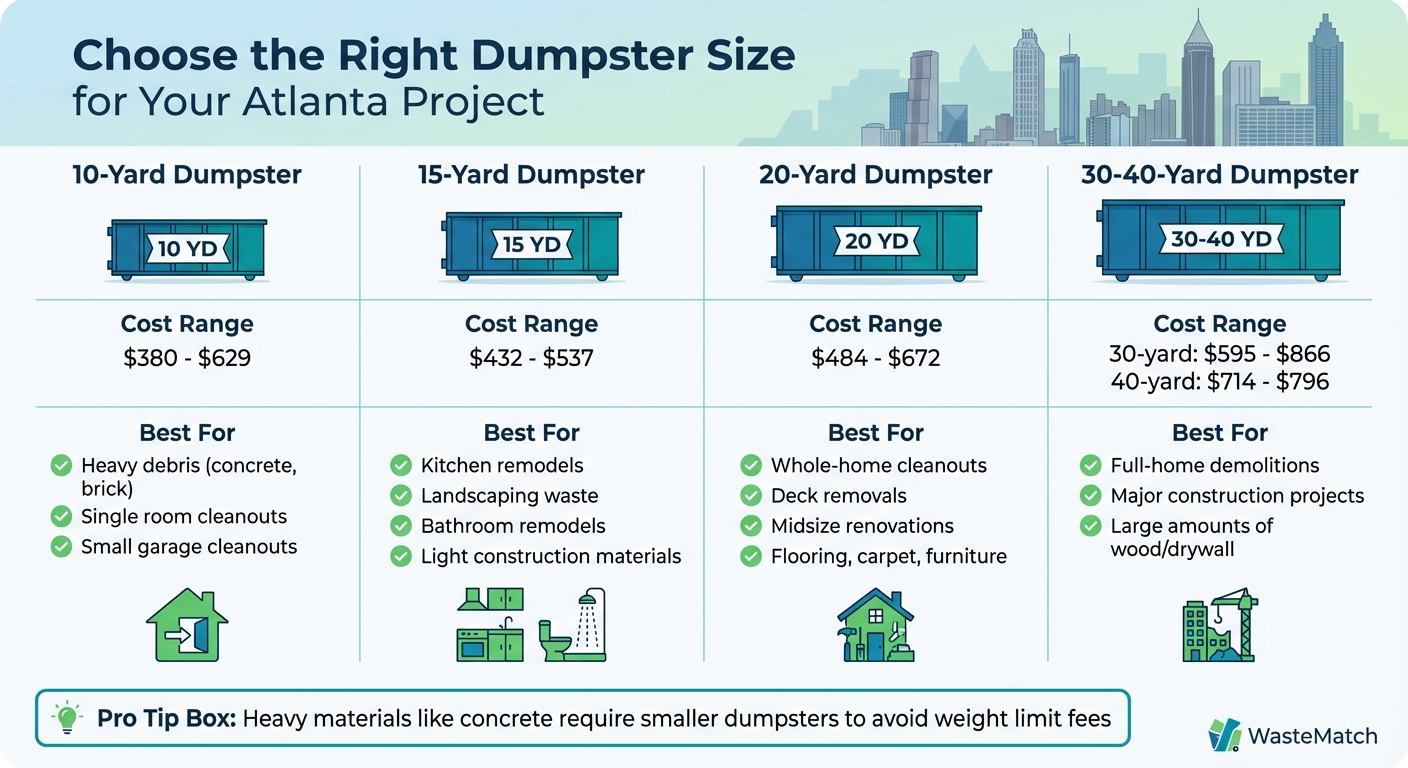
Atlanta Dumpster Sizes and Costs Comparison Guide
Getting the wrong dumpster size can lead to wasted money - either by paying for space you don’t use or needing an extra rental. The right choice depends on the scope of your project and the type of debris you need to dispose of. Let’s take a closer look at how to match dumpster sizes to your needs.
Dumpster capacity is measured in cubic yards, and costs can vary by size and location. For example, in Atlanta, a 10-yard dumpster typically costs between $380 and $629, while a 40-yard container ranges from $714 to $796. Keep in mind that size isn’t just about cost - it also impacts weight limits. Heavy materials like concrete, asphalt, or brick often require smaller dumpsters to avoid exceeding weight restrictions and incurring extra fees.
Small Projects: Single Room Cleanouts
If you're tackling a small project like cleaning out a bedroom, garage, or attic in your Virginia-Highland home, a 10-yard or 15-yard dumpster is usually enough. A 10-yard container is perfect for heavy debris like concrete or brick, while a 15-yard bin works well for kitchen remodels or landscaping waste. Rental prices for a 15-yard dumpster typically range from $432 to $537. For even smaller jobs, like a bathroom remodel or clearing out a closet, a 12-yard dumpster - costing between $390 and $505 - offers plenty of room for household junk or light construction materials.
Stick with smaller bins for minor cleanouts or projects to avoid paying for more space than you need.
Large Projects: Renovations and Yard Work
For bigger jobs, such as whole-home cleanouts, deck removals, or midsize renovations, you’ll need a larger dumpster. A 20-yard container is a popular choice for these types of projects, with rental costs ranging from $484 to $672. It can handle flooring, carpet, furniture, and even appliances. For even larger undertakings, like full-home demolitions or major construction projects, a 30-yard dumpster (typically $595 to $866) or a 40-yard container (usually $714 to $796) is better suited for handling wood, drywall, and other large debris.
Before delivery, make sure the drop-off area is clear of cars, gates, and low-hanging wires to avoid unnecessary delays.
Atlanta Dumpster Regulations You Should Know
Sticking to Atlanta's dumpster placement and disposal rules is essential for keeping your project on track. Before your dumpster arrives, make sure you’re familiar with the city’s guidelines to avoid fines, delays, or unexpected fees.
The main thing to consider is where the dumpster will be placed. If it’s going on your driveway or yard, you’re generally good to go. But placing it on a public street, sidewalk, or alley? That’s a different story - you’ll likely need a permit and may face additional requirements. Atlanta also has strict rules about what can and cannot go into a dumpster, especially when it comes to hazardous materials and electronics. Let’s dive into the details, starting with permits.
When You Need a Permit
Permits are only required if the dumpster is placed on public property, such as streets, sidewalks, or alleys. According to the Atlanta Department of Transportation (ATLDOT), "A permit is required for all dumpsters/containers and PODS placed on the City's Public Right-of-Way". To get a permit, you’ll need to submit an application through the ATLDOT portal at least a week before your dumpster is scheduled for delivery. The application also requires a Certificate of Liability Insurance naming the City of Atlanta as the certificate holder, along with a site plan showing exactly where the dumpster will be located. Even if you’re placing the dumpster on private property, it’s a good idea to check with your HOA to ensure you’re following their rules.
Items You Can't Throw in a Dumpster
Placement isn’t the only thing to think about - what you’re throwing away matters too. Hazardous materials are strictly prohibited in standard dumpsters. Items on the banned list include paints, chemicals, oils, batteries, medical waste, fuel containers, and any appliances containing refrigerants, like refrigerators or wine coolers. Electronics such as computers, laptops, and hard drives must be taken to certified recyclers, like Ecycle Atlanta. Other restricted items include tires, vehicle parts, and pressurized gas or propane containers.
For hazardous household waste, contact CHaRM, Atlanta’s Center for Hard to Recycle Materials. Tossing prohibited items into your dumpster can lead to a lot of headaches - landfill rejections, extra fees, or even fines from the City’s Solid Waste Education Enforcement Team (SWEET). Knowing what’s off-limits before you start loading your dumpster can save you time, hassle, and money.
How to Rent a Dumpster with WasteMatch
Once you've chosen the right dumpster size and reviewed any necessary regulations, the next step is to rent your dumpster. WasteMatch makes this process simple and efficient, saving you time and hassle.
With WasteMatch, renting a dumpster is straightforward. You can text or call to get a price quote, schedule delivery, and arrange pickup. The process is designed with transparency in mind, offering clear pricing upfront and scheduling options that align with your project needs.
Step 1: Get a Price Quote
Start by providing details about your project. Reach out to WasteMatch via text or phone with your project address and clear photos of the debris you need removed. Submitting photos helps ensure the service matches your specific needs. Be as detailed as possible about what you’re disposing of - materials like concrete or bricks have different weight limits and costs compared to standard household items. WasteMatch’s pricing eliminates surprises, moving away from the common "base price plus unexpected fees" structure found with many traditional rental services.
Step 2: Schedule the Delivery
Once you’ve received your quote, choose a delivery time that works best for your schedule. WasteMatch offers same-day and on-demand delivery, freeing you from rigid time slots. Scheduling is simple - "No apps. Just reach out with the address and photos, we handle the rest". For longer projects, like home renovations or multi-phase cleanouts, you can opt for a prepay model that includes three flexible pickups. This gives you the freedom to call for service whenever debris piles up.
Step 3: Prepare for Drop-Off and Pickup
After scheduling delivery, make sure the drop-off area is ready. Clear the space where the dumpster will be placed, and ensure the truck has easy access to your driveway or designated spot. If the dumpster needs to be placed on a city street, you’ll need a permit from ATLDOT. WasteMatch also takes care of waste removal, with their team documenting the process using before-and-after photos to confirm the job is done. Keeping pathways clear, especially to driveways or back areas, helps the team work efficiently and ensures a smooth cleanup process.
sbb-itb-c7714ed
Getting the Most from Your Dumpster Rental
Making the most of your dumpster rental starts with efficient loading and staying mindful of weight limits. Proper planning not only maximizes space but also helps you avoid extra fees and ensures the dumpster is safe for transport. Many Atlanta dumpster rentals include a weight limit, so exceeding it can lead to additional charges. Here's how to use your dumpster rental effectively.
Load Your Dumpster Wisely
Begin by placing the heaviest items, like appliances, bricks, or large, flat materials such as wooden boards or tiles, at the bottom. This creates a stable base and distributes weight evenly. Use smaller debris to fill gaps between these bulky items. To save space, break down large furniture or boxes - this reduces air pockets and allows you to fit more into the container.
For lighter items, such as clothing, paper, or styrofoam, place them in bags to keep them secure during transport. Be sure nothing hangs over the sides or rises above the top edge of the dumpster. Overfilled containers can be a safety risk, and many haulers will refuse to pick them up.
Keep Within Weight Limits
Once your dumpster is loaded efficiently, it’s crucial to stay within the specified weight guidelines. For heavy materials like concrete, asphalt, or bricks, a 10-yard dumpster is usually the best choice. For lighter, bulkier items such as furniture or household junk, larger dumpsters - like 30- or 40-yard containers - are more practical. When renting, let the provider know the type of project you’re tackling, whether it’s a kitchen remodel or deck removal, so they can recommend the right size and weight limit.
Be cautious about what you throw in. Prohibited items like paint, batteries, or other hazardous materials can result in pickup refusals or extra fees. By staying within weight limits and following these loading tips, you’ll make the most of your dumpster rental and keep your project on track.
Conclusion
Managing waste disposal for home projects in Atlanta doesn’t have to be complicated. Whether you’re refreshing a bathroom in Heritage Valley, clearing out an entire home in Midtown, or sprucing up your yard in Buckhead, WasteMatch provides straightforward pricing and flexible scheduling. They handle everything from drop-off to pickup and disposal, with no hidden fees or unexpected costs.
You can schedule delivery and pickup at times that work best for your project. Whether it’s a compact 10-yard dumpster for a small cleanout or a spacious 40-yard container for a major renovation, WasteMatch ensures safe placement on your driveway. Their simple online quoting tool and expert guidance make it easy to select the right size without second-guessing.
Don’t forget to review loading guidelines and any necessary permits. For dumpsters placed on public property, confirm permit requirements and timelines in advance. If your project is in an HOA community, check placement rules to avoid any surprises.
With clear steps and professional support, WasteMatch makes waste disposal hassle-free. Reach out today for a free quote and to schedule your rental. Whether it’s decluttering or a large-scale renovation, they’re ready to help you get the job done efficiently.
FAQs
What dumpster size is best for my home project in Atlanta?
Choosing the right dumpster size is all about matching it to the type and scale of your project. For smaller jobs - like a single-room remodel, garage or basement clean-out, or small landscaping project - a 10-yard dumpster is typically sufficient. Measuring roughly 10 ft long × 8 ft wide × 4 ft high, it can hold up to 2,000 pounds of debris and generally costs between $380 and $629 in Atlanta.
For medium-sized tasks such as a kitchen remodel, moderate yard work, or a home renovation, you’ll want to step up to a 12- or 15-yard dumpster. A 12-yard option (about 12 ft long × 8 ft wide × 4 ft high) costs around $390 to $485, while a 15-yard dumpster (approximately 14 ft long × 8 ft wide × 4 ft high) is better for slightly larger loads, like removing a small deck.
If you’re tackling a bigger project - such as a full-home remodel, deck or porch removal, or major landscaping work - a 20-yard dumpster is a solid choice. With dimensions of 22 ft long × 8 ft wide × 4 ft high, it can handle large amounts of waste and typically costs between $469 and $672. For the most extensive jobs, like whole-house demolition or large-scale construction, you may need a 30- or 40-yard dumpster. Just keep in mind that these larger sizes require more space, such as a bigger driveway.
Choosing the right size not only ensures you have enough capacity for your waste but also helps you avoid overspending.
Do I need a permit to rent a dumpster for my home project in Atlanta?
If you plan to place the dumpster on public property - like a city street, sidewalk, alley, or any other public space - you’ll need to get a permit. These are handled by the City of Atlanta’s Department of Public Works Office of Transportation.
On the other hand, if the dumpster will sit on private property, such as your driveway, garage, or yard, you won’t need a permit from the city. That said, if you’re part of a homeowners’ association (HOA), it’s worth checking their rules to make sure you’re in line with any neighborhood guidelines.
What items can’t be thrown into a dumpster?
Some items can't be tossed into a dumpster because of safety concerns and regulatory rules. Here's what to avoid:
- Hazardous materials: This includes anything toxic, flammable, or corrosive.
- Electronics (e-waste): Items like TVs, computers, and batteries fall under this category.
- Lead-based construction materials: These require special handling to prevent contamination.
- Medical waste: Biohazard items must be disposed of through specialized services.
To stay on the safe side, always review local disposal rules or ask your dumpster rental provider for guidance on handling restricted items.