When you schedule junk removal in Atlanta, your old stuff doesn’t just disappear - it goes through a process to minimize waste and maximize reuse. WasteMatch ensures your items are sorted for recycling, donation, or proper disposal. From donating usable furniture to local charities to recycling materials like glass and metals, they handle it all while keeping landfill use as a last resort.
Here’s what you’ll learn:
- How items are sorted and where they go after pickup
- Which Atlanta facilities handle recycling and donations
- What happens to items that can’t be reused
Ready to clear the clutter responsibly? WasteMatch makes it simple with same-day pickups and transparent pricing.
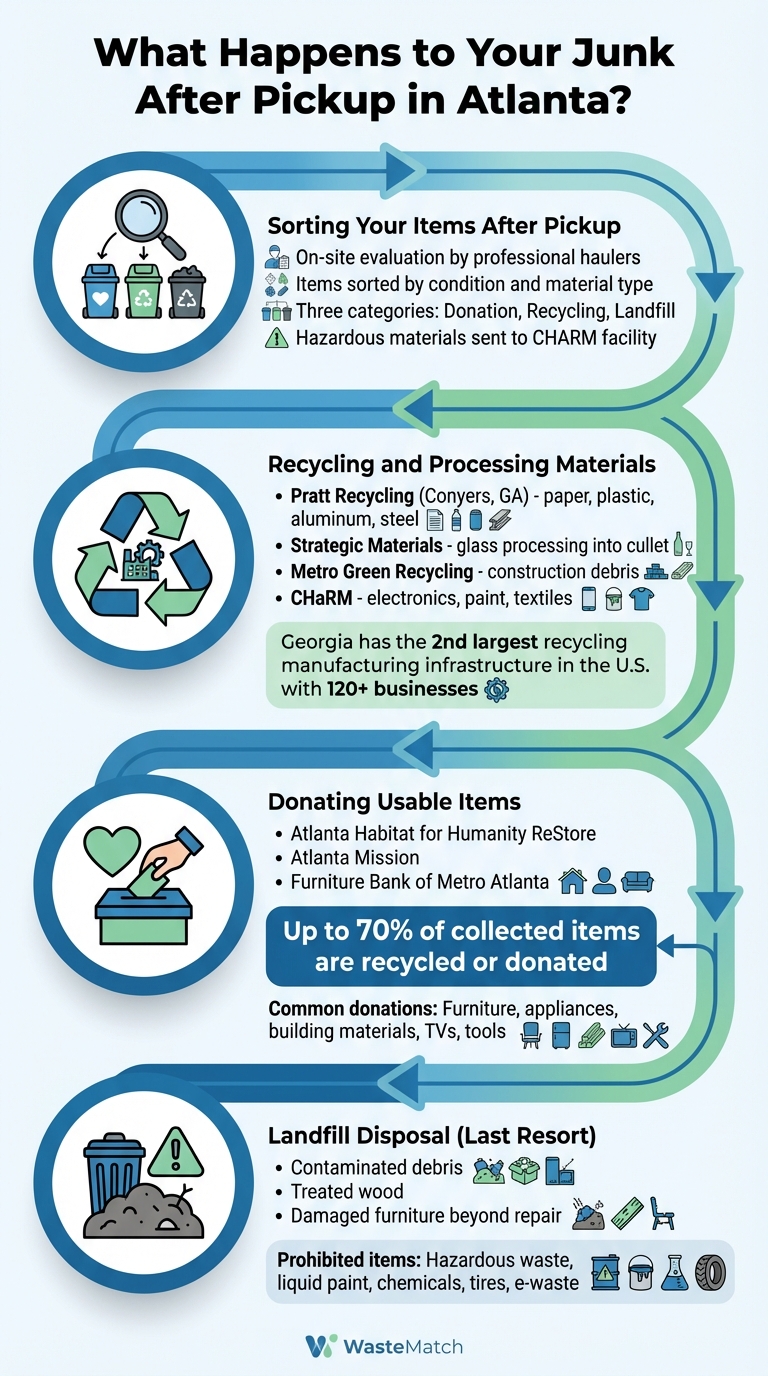
4-Step Junk Disposal Process in Atlanta: From Pickup to Recycling
Step 1: Sorting Your Items After Pickup
Once items are picked up, the sorting process kicks into gear. Professional haulers in Atlanta conduct an on-site evaluation to decide the best reuse or disposal path for each item. As the City of Atlanta Department of Public Works notes, "The only way our recycled materials end up in the landfill is if they are improperly sorted beginning curbside or if there is contamination."
How Haulers Sort Items On-Site
Haulers carefully inspect items based on their condition and material type. Usable furniture, functioning appliances, and other salvageable goods are earmarked for donation to local Atlanta charities. Clean, dry, and loose materials - like cardboard, metals, and certain plastics - are sorted for recycling. However, items contaminated with food, liquids, or hazardous waste (such as diapers or needles) are sent to landfills to avoid spoiling entire batches of recyclables.
For hazardous materials, such as pesticides, motor oil, or paint, haulers follow strict guidelines. These items are sent to specialized facilities like the Center for Hard to Recycle Materials (CHARM) to ensure they are handled safely and responsibly.
Where Different Materials Go
Once sorted, materials are grouped by type and sent to appropriate facilities. Ferrous metals, such as steel and iron, are processed at facilities that use magnets to separate them from other waste. Non-ferrous metals, like aluminum, are sorted using eddy current separators. Paper and cardboard are typically sent to Pratt Paper Mill in Conyers, GA, while glass containers go to Strategic Materials for further processing. Electronics, textiles, and other challenging items are routed to CHARM for specialized recycling.
Taking small steps - like keeping recyclables loose, rinsing food containers, and ensuring items are dry - makes a big difference. When haulers can quickly identify clean, uncontaminated materials, more of your discarded items can be repurposed or recycled. This thorough sorting process lays the groundwork for turning waste into new, usable products.
Step 2: Recycling and Processing Materials
Once your recyclables are sorted, they’re sent to specialized facilities around the Atlanta area, where they’re transformed into raw materials. Common household items like paper, plastic, aluminum, and steel travel from the transfer station on Fulton Industrial Boulevard to Pratt Recycling in Conyers, Georgia. At this Material Recovery Facility, mechanical sorters and manual inspections work together to separate materials, which are then compacted into bales for resale. Paper and cardboard take a direct route to the onsite Pratt Paper Mill, where they’re turned into new recycled paper products.
Atlanta Recycling Centers
Glass takes a different journey. Because it requires special handling, it’s sent to Strategic Materials, where it’s processed into cullet, a material ready to be melted and reshaped. Construction debris, including concrete, wood, and metals from renovation projects, is delivered to facilities like Metro Green Recycling. Here, concrete is repurposed into materials like Gravel Aggregate Base (GAB) and Crusher Run for road construction, while wood is processed into mulch. Electronics, paint, and textiles are handled by the Center for Hard to Recycle Materials (CHaRM), where they’re processed to maximize their potential for reuse.
Georgia is home to the second-largest recycling manufacturing infrastructure in the country, with over 120 businesses across the state using recycled materials to create new products.
How Recycled Materials Become New Products
After being sorted and baled at facilities like Pratt Recycling, materials are sold to re-processors who transform them into usable raw materials. Metals are melted and reshaped into new products. Plastics go through cleaning, shredding, and pelletizing before being molded into items such as outdoor furniture, playground equipment, or new containers. That cardboard box you recycled today might come back as the shipping box for your next online order.
For this system to work, materials need to be clean and free from contamination. Keeping recyclables loose, dry, and free of food residue ensures they can be processed effectively and given a second life. Up next, we’ll look at how items in good condition find new homes through donation partnerships.
Step 3: Donating Usable Items
In Atlanta, items that are still in good condition often find a second life through donations to local nonprofits. This effort not only reduces waste but also supports families and organizations in need. Some haulers in the area report that as much as 70% of what they collect is either recycled or donated, showcasing a commitment to sustainability and community support. Now, let’s see what happens to items that can’t be recycled or donated, completing the journey from your home to responsible disposal.
Partnering with Atlanta Charities
WasteMatch collaborates with several local organizations, including Atlanta Habitat for Humanity ReStore and the Atlanta Mission. The ReStore accepts a variety of items such as quality furniture, appliances (generally under 10 years old and weighing less than 300 pounds), kitchen and bathroom cabinets, lighting fixtures, and building materials like uninstalled flooring and windows. Proceeds from these donations go directly toward building affordable homes. The Atlanta Mission, on the other hand, takes in clothing and household goods, using the funds raised to support programs for the homeless.
Each item is carefully evaluated to ensure it meets the charity’s standards. Most organizations only accept items in good condition, meaning they must be free of damage like rips, stains, or missing parts. Appliances need to be in working order, and even specific items like toilets must adhere to current standards, such as using 1.6 gallons of water per flush or less. Donation guidelines can differ between charities; for instance, while the Furniture Bank of Metro Atlanta will accept any mattress, other organizations may have stricter requirements. This tailored approach ensures that donated items are put to the best possible use.
Frequently Donated Items
A wide range of items is commonly donated, including furniture, cabinetry, appliances (both small and large), building materials, flat-screen TVs, area rugs, tools, and hardware. Bedroom sets and large appliances, often referred to as white goods, are particularly sought after for donation.
To make the donation process smoother, group similar items together, such as cabinetry, doors, or windows, before scheduling a pickup. Ensuring that appliances are in working condition and furniture is sturdy increases the likelihood that your items will be accepted.
Next, we’ll dive into what happens to items that aren’t suitable for recycling or donation.
sbb-itb-c7714ed
Step 4: Landfill Disposal for Remaining Items
After sorting, recycling, or donating usable materials, some items inevitably need to be sent to a landfill. These typically include contaminated debris, treated wood, or furniture that's damaged beyond repair. WasteMatch ensures these materials are transported to authorized landfills in Metro Atlanta, adhering strictly to local waste management rules. This approach helps prevent illegal dumping and protects the environment.
How WasteMatch Handles Landfill Use
Using landfills is always considered a last resort. WasteMatch prioritizes recycling and donating whenever possible, reflecting its commitment to responsible waste management. For items that cannot be salvaged, WasteMatch ensures they are directed to the proper disposal facilities. The company accepts all kinds of bulk items, ensuring they are handled in accordance with local guidelines.
Items Not Allowed in Atlanta Landfills
Certain materials are prohibited from being disposed of in Atlanta's municipal landfills. These include hazardous waste, liquid paint, chemicals, tires, and specific electronics (e-waste). If your junk includes any of these restricted items, WasteMatch ensures they are rerouted to specialized facilities designed to handle hazardous materials. This prevents harmful substances from contaminating soil or groundwater. Before scheduling a pickup, it’s helpful to identify any items that might need special attention. WasteMatch also offers responsible disposal solutions for large appliances and other restricted materials, ensuring everything is processed through the appropriate channels.
Next, we’ll explore how WasteMatch’s overall disposal strategy supports these environmentally conscious practices.
How WasteMatch Handles Disposal Responsibly
WasteMatch has made responsible disposal a core part of its service. Every pickup is meticulously documented with before-and-after photos, ensuring that haulers stick to their promises of sorting, recycling, and donating items rather than sending everything straight to the landfill.
The service also offers transparent, upfront pricing based on Metro Atlanta's current dump fees. Customers only pay after the job is completed, using a secure digital payment system.
What sets WasteMatch apart is its flexibility. They accept a wide range of bulk items, including large appliances and construction debris - things that many traditional services often reject. Using a simple photo-and-text dispatch system, WasteMatch makes scheduling pickups easy while promoting efficient routes to reduce unnecessary trips and their associated carbon footprint. This streamlined approach not only simplifies the process for customers but also demonstrates a commitment to sustainability. As Nathalie and Gabi, two business owners who rely on WasteMatch, shared:
WasteMatch has been a lifesaver. Their on-demand pickups keep our back area clear and running smoothly.
WasteMatch vs. Standard Junk Removal
Here’s a quick look at how WasteMatch stacks up against traditional junk removal services:
| Feature | WasteMatch | Standard Junk Removal |
|---|---|---|
| Pricing | Transparent, no hidden fees, pay after completion | Often volume-based, hidden fees, possible deposits |
| Disposal | Focuses on recycling/donations with eco-conscious sorting | More landfill reliance, minimal sorting efforts |
| Payment | Secure digital platform with receipts | Cash or checks, less secure |
| Service | Same-day availability, vetted pros, property protection | Variable scheduling, higher risk of property damage |
| Documentation | Before-and-after photo verification | Rarely provides documentation |
The standout difference is accountability. WasteMatch assigns a dedicated account manager to oversee each job and provides photo verification for every haul. In contrast, standard services often lack follow-up or any form of documentation.
WasteMatch Home Membership Benefits
For those looking to simplify their annual cleanouts, WasteMatch offers a membership plan called WasteMatch Home. For $129 per year, Atlanta renters and homeowners gain access to a smarter, more convenient way to manage bulk disposals. The membership includes one pickup job (valued at up to $250), which can be used for various cleanout scenarios - whether you're getting rid of old furniture, clearing out appliances, or tackling a pile of boxes. You decide when to use the benefit, whether it’s during a lease transition, a spring cleaning spree, or an unexpected furniture swap.
Members also enjoy perks like priority booking during peak move-out times and locked-in pricing, which protects against surge fees or last-minute charges. Plus, any unused pickup credit rolls over, giving you even more flexibility.
Next Steps
Now that you know how your junk is responsibly managed after pickup, scheduling a removal with WasteMatch couldn’t be easier. There’s no need for an app or lengthy forms - just snap a photo of your items and text it along with your Atlanta address. A trusted hauler will be sent to your location, often on the same day, and your service will be confirmed.
Whether you’re tackling a one-time cleanout or planning for regular pickups, WasteMatch offers straightforward, pay-after-service pricing. You’ll only pay once the job is done, with rates based on Metro Atlanta's current dump fees - no hidden costs, no surprises.
For those who handle junk removal on a yearly basis, WasteMatch Home makes annual cleanouts hassle-free. For $129 per year, you’ll receive one pickup (valued up to $250), priority scheduling during busy seasons, and locked-in rates with zero unexpected fees. Plus, if you don’t use your included pickup this year, it rolls over to the next - giving you flexibility to use it when you need it most.
Getting started is quick and easy. Snap a few photos, send your address, and let WasteMatch take care of the rest. Whether you’re removing a single piece of furniture or clearing out an entire apartment, the process is designed to be fast, transparent, and convenient for your schedule.
With fair pricing, quick service, and flexible options, WasteMatch is here to help you reclaim your space. Ready to say goodbye to the clutter? Book your pickup or sign up for WasteMatch Home today for a responsible, stress-free cleanup.
FAQs
What happens to junk that can’t be recycled or donated in Atlanta?
Items that can’t be recycled or donated are managed with care to ensure they’re disposed of responsibly. Once sorted, materials that aren’t recyclable are sent to city-approved landfills or waste-to-energy plants. At these facilities, they’re either compressed and buried or processed to produce energy. The cost for this disposal is already built into the service fee, which usually falls between $30 and $100 per ton.
Hazardous materials - such as toxic, flammable, or corrosive substances - are sent to certified hazardous waste facilities for safe handling and treatment. For items that are more challenging to recycle, like certain plastics, batteries, or electronics, they’re taken to Atlanta’s Center for Hard-to-Recycle Materials (CHaRM), where they undergo specialized processing. This approach ensures that even materials that can’t be reused are handled responsibly and in full compliance with Atlanta’s waste management guidelines.
How does WasteMatch manage hazardous materials responsibly after pickup?
WasteMatch takes the handling of hazardous materials seriously, focusing on methods that minimize harm to the environment. Though their exact processes may differ depending on the situation, these materials usually demand specialized disposal techniques to meet safety and regulatory standards. WasteMatch emphasizes responsible management by following local laws and working with certified facilities to ensure proper handling and disposal.
If you need more details about how they manage hazardous materials, you can reach out to WasteMatch directly for clarity on their procedures.
What are the perks of WasteMatch's Home Membership plan?
At the moment, there’s no detailed information available about WasteMatch's Home Membership plan. If you have more specifics about the program, we’d gladly help break down its advantages. In the meantime, it’s best to contact WasteMatch directly to get the full scoop on what the membership offers and how it could work for you.