Getting rid of old appliances in Metro Atlanta can feel like a headache. You can’t just leave them at the curb, and figuring out where to take them - or how to handle things like refrigerants - can get complicated fast. Whether you’re a renter or a homeowner, the good news is there are simple, legal ways to do it without risking fines or breaking a sweat.
Here’s the short answer: If you live in a single-family home, the city offers free bulk pickups for items like fridges, stoves, and washers. Renters in apartments or condos? You’ll need to look into local recycling centers, donation programs, or services like WasteMatch, which handles everything from pickup to proper disposal.
What you’ll learn:
- The rules for appliance disposal in Atlanta
- How to prepare items for pickup or recycling
- Why WasteMatch is a game-changer for renters
Let’s make your appliance removal stress-free and responsible.
Metro Atlanta Appliance Disposal Rules You Need to Know
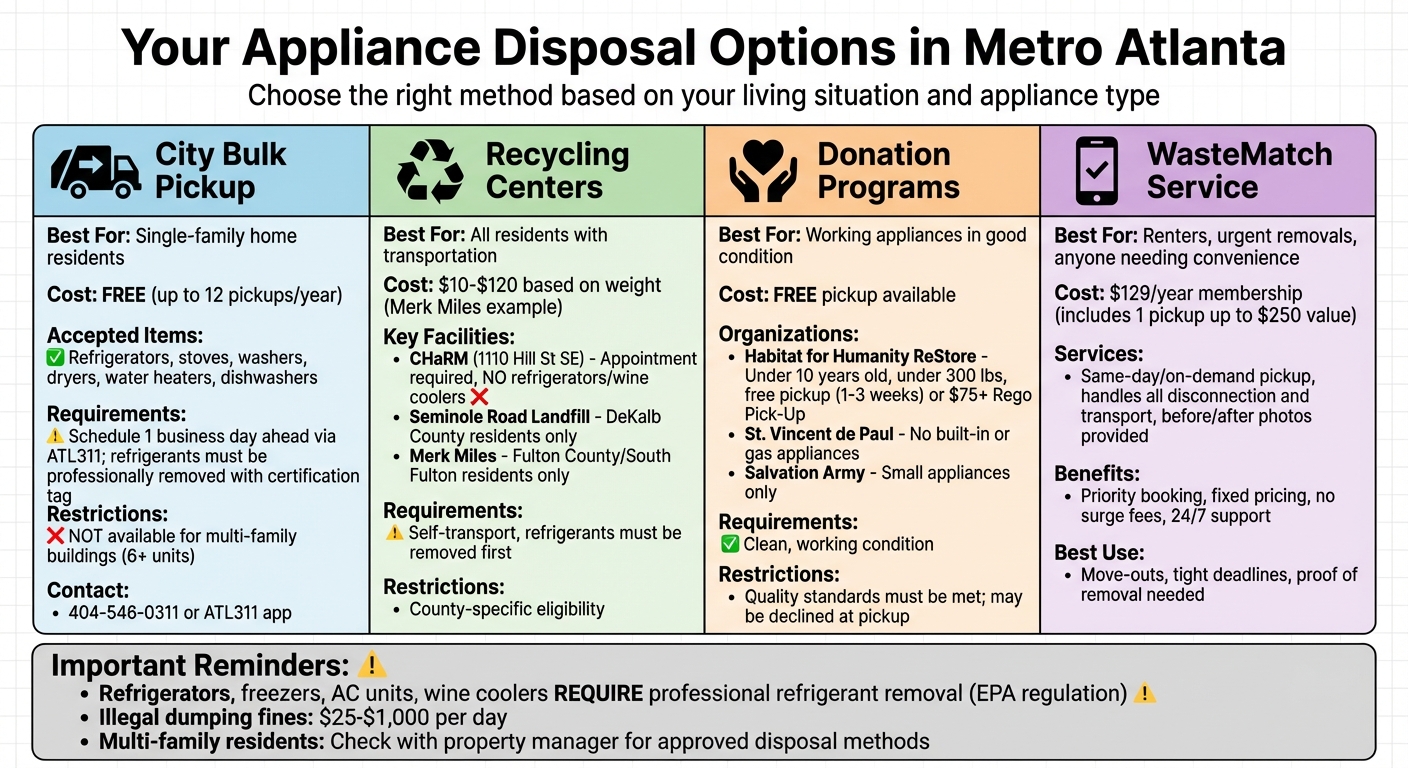
Metro Atlanta Appliance Disposal Options Comparison Chart
Before you get rid of that old fridge, it’s essential to understand the local rules for appliance disposal. In Metro Atlanta, large household appliances - like refrigerators, ovens, washers, dryers, water heaters, and dishwashers - are classified as "white goods." These items are considered bulk waste because they’re too large for regular garbage collection trucks to handle. Tossing them in your regular trash isn’t an option.
Knowing how these appliances are classified helps clarify which ones require special handling.
Which Appliances Require Special Disposal
Refrigeration units - such as refrigerators, freezers, wine coolers, and ice makers - contain regulated refrigerants like Freon or CFCs, which fall under EPA regulations. Air conditioners and space heaters are in the same category, and these items must undergo professional refrigerant recovery before being recycled or scrapped. If you’re a renter, this is especially important to keep in mind during move-outs or lease transitions.
Other appliances, including stoves, ovens, washing machines, dishwashers, and microwaves, may contain hazardous materials like mercury switches, polychlorinated biphenyls (PCBs), used oil, or heavy metals such as lead.
Local Disposal Regulations
Disposal rules can get tricky, particularly for renters. The City of Atlanta provides bulk pickup services to over 100,000 residential households, but this service is limited to single-family homes. If you live in a multi-family building with six or more units, the city isn’t responsible for bulk item collection. Instead, property owners must arrange for private waste haulers to handle these items, as required by Code Section 130-38. Be sure to check with your property manager to understand how appliance removal is managed in your building.
It’s illegal to store old appliances outside your property or to dump them on any land. Violations can result in fines ranging from $25 to $1,000 per day. The Solid Waste Education Enforcement Team (SWEET) actively monitors and enforces these regulations.
By understanding these local rules, you’ll know the best way to handle appliance disposal.
Your Disposal Options at a Glance
For Metro Atlanta renters, there are several responsible ways to dispose of old appliances. If you live in a single-family home, the city offers a bulk pickup service that allows up to 12 free collections per year. To schedule a pickup, contact ATL311 by calling 404-546-0311 or using their online portal. Make sure to schedule at least one business day in advance, and place your appliances curbside between 7:00 PM the night before and 7:00 AM on the pickup day to avoid fines.
If you’re in a multi-family building, local recycling centers and scrap metal yards will accept appliances. For example, the Merk Miles Citizens Convenience Center in Fulton County charges weight-based fees, with loads under 150 pounds costing about $10 and larger loads up to 1,000 pounds costing as much as $120. Donation programs like Habitat for Humanity and The Salvation Army accept working appliances, though organizations like Goodwill typically don’t take large items.
For renters who don’t have access to city bulk pickup services, WasteMatch offers a convenient solution. This service connects you with haulers who handle everything from disconnection to transport and proper refrigerant recovery, making heavy appliance disposal much easier.
Up next, we’ll walk you through how to safely prepare your appliances for removal.
sbb-itb-c7714ed
How to Prepare Your Appliances for Removal
Getting your appliances ready for removal isn’t just about convenience - it’s also about safety and avoiding any damage to your property. Whether you’re planning to schedule a city bulk pickup or hire a junk removal service, a little preparation goes a long way. Here’s what you need to know to make the process as smooth as possible.
Disconnecting Your Appliances Safely
Start by unplugging refrigerators, freezers, and air conditioners a few days in advance to give them time to cool down completely. For washers and dishwashers, turn off the main water valve and disconnect all hoses to prevent leaks or water damage. If you’re dealing with a gas stove or dryer, make sure to turn off the gas line before proceeding. For added safety, it’s a good idea to call in a professional to handle this step.
Once everything is disconnected, remove any loose parts like racks, shelves, or hoses to make transportation easier. Secure appliance doors with masking or duct tape to keep them from swinging open during the move. And don’t forget to use a dolly or similar tool to safely move heavier appliances.
Refrigerant Removal Rules
If your appliance contains refrigerants - like those in refrigerators, freezers, or air conditioners - you’ll need to take extra precautions. These substances must be removed by a certified professional to avoid environmental damage and to comply with legal requirements. Never try to handle refrigerants on your own; instead, rely on professional recycling facilities to take care of this step properly.
If you’re using a junk removal service, double-check that they work with certified recycling facilities that follow state and EPA guidelines for handling hazardous materials.
What Renters Should Know Before Disposal
If you’re renting, it’s important to determine whether the appliance belongs to you or is the property of your landlord. Some leases include an "appliance repair lease addendum" that specifies who is responsible for maintenance and removal. Check your lease for details, notify your property manager about the removal, and take photos to document the appliance’s condition.
Finally, coordinate with your building management to ensure the removal process causes minimal disruption to others in the building.
With these steps taken care of, you’ll be ready to explore public disposal services available to Metro Atlanta residents.
Public Disposal Services in Metro Atlanta
Once you've prepared your old appliances for disposal, Metro Atlanta offers several public options to get the job done without breaking the bank. Residents can take advantage of free or low-cost services to responsibly dispose of their unwanted appliances.
City of Atlanta Bulk Pickup Service
If you live in Atlanta, you're in luck! The city provides up to 12 free bulk pickups per year for residents. This service includes "white goods" like refrigerators, stoves, washers, and dryers. Scheduling is simple - use 311, the ATL311 app, or go online. Just make sure to book at least one business day ahead of time. On pickup day, place your appliance at the curb by 7:00 a.m. (or after 7:00 p.m. the night before) and keep it at least three feet away from other items. For appliances containing refrigerants, you'll need a certification tag confirming proper removal.
To avoid any surprise fees, track your pickups through the ATL311 app. If bulk pickup isn’t an option for you, don’t worry - there are other ways to dispose of your appliances, including drop-off sites.
Local Recycling Centers and Scrap Metal Yards
For those who prefer to drop off their appliances - or if your items don’t meet the criteria for bulk pickup - Metro Atlanta has plenty of recycling centers and scrap metal facilities. One popular option is the Center for Hard to Recycle Materials (CHaRM), located at 1110 Hill St SE in Atlanta. They accept large appliances and electronics, but you’ll need to schedule an appointment by calling 404-600-6386. Keep in mind, CHaRM does not accept refrigerators, wine coolers, or other items containing refrigerants.
Here’s a quick look at some local facilities:
| Facility Name | Location | Accepted Items | Key Restrictions |
|---|---|---|---|
| CHaRM | 1110 Hill St SE, Atlanta | Large appliances, electronics | Appointment required; no refrigerators or wine coolers |
| Seminole Road Landfill | 4203 Clevemont Rd, Ellenwood | Appliances, scrap metal | DeKalb County residents only |
| Merk Miles Convenience Center | 3225 Merk Rd SW, College Park | Bulky items, electronics | Fulton County/South Fulton residents only |
| M&M Recycling / SA Recycling | Various Metro Atlanta locations | Scrap metal from appliances | May offer payment for metal |
Scrap metal yards like M&M Recycling and SA Recycling are great for appliances made of ferrous and nonferrous metals, such as steel and aluminum. Before heading there, make sure any refrigerants have been professionally removed. You'll also need to handle the transportation and unloading yourself.
For appliances containing hazardous substances, additional precautions are necessary.
Disposing of Appliances with Hazardous Materials
Some appliances, like refrigerators and air conditioners, contain hazardous materials such as refrigerants. These require special handling. While the City of Atlanta’s bulk pickup service accepts such items (as long as the refrigerants have been properly removed and certified), many recycling centers do not.
Another option is Atlanta Recycles Day, held every third Saturday from February through December at Greenbriar Mall (2841 Greenbriar Pkwy SW) from 9:00 a.m. to 12:00 p.m. This event accepts small electronics and other recyclables. When recycling appliances with hazardous components, ensure the service you choose works with certified facilities that follow EPA guidelines.
With these public disposal options in mind, you can responsibly get rid of your old appliances while keeping the environment in mind. Next, let’s explore how donating or recycling your items can make a positive impact on the community.
Donating or Recycling Your Old Appliances
If you have old appliances gathering dust, consider donating those that still work or recycling the ones that don’t. It’s a great way to give back and recover useful materials.
When and Where to Donate Appliances
For working appliances, Atlanta Habitat for Humanity ReStore is a fantastic choice. They accept items that are less than 10 years old, weigh under 300 pounds, and are in good condition. You can schedule a free pickup 1–3 weeks in advance, or opt for their Rego Pick-Up service, which starts at $75 for quicker service. Keep in mind, their drivers will inspect your items upon arrival and may decline them if they don’t meet quality standards or if inventory is full.
St. Vincent de Paul is another option for functional appliances, though they don’t accept built-in models, gas appliances, or TVs older than five years. Similarly, The Salvation Army welcomes small appliances at their Atlanta drop-off locations but doesn’t take large ones. Before donating, ensure your appliances are clean and in working order. As Habitat ReStore explains: “Due to the time, space, cost, and safety concerns associated with handling these materials, we are unable to accept non-working appliances… Please check with your local recycling centers”.
If your appliances aren’t suitable for donation, recycling or selling them for scrap is a practical alternative.
Recycling or Selling Appliances for Scrap
Non-working appliances made from steel, aluminum, or other metals can often be recycled or sold to scrap metal facilities. Businesses like M&M Recycling and SA Recycling accept ferrous and nonferrous metals and may even pay you based on the weight and type of metal. Before heading to the scrap yard, ensure any refrigerants are professionally removed, and check for restrictions on batteries or gas containers.
If donation or scrap recycling doesn’t work for you, specialized removal services can help take care of your old appliances.
Get Appliances Removed with WasteMatch

If you’re looking for a quick and easy way to get rid of old appliances, WasteMatch has you covered. Designed specifically for renters and homeowners in Metro Atlanta, this service takes the hassle out of appliance removal. No need to rent a truck, coordinate city pickups, or lug heavy items yourself - WasteMatch handles it all.
How WasteMatch Makes Appliance Disposal Simple
WasteMatch connects you with local haulers who take care of everything, from pickup to proper disposal. All you have to do is send a text or call with your address and a photo of the appliance. A local hauler will handle the rest, providing before-and-after photos as proof of removal. The service offers same-day and on-demand options, which is perfect if you’re moving out or working with a tight deadline. Plus, they ensure appliances are recycled, donated, or disposed of responsibly. WasteMatch fills the gap between public services and donation options, offering a reliable solution for urgent situations.
WasteMatch Home Membership Perks
For $129 a year, the WasteMatch Home membership gives you a lot of bang for your buck. It includes one pickup (valued at up to $250), priority booking, fixed pricing without surge fees, and rollover credit. This prepaid setup means no surprises - what you see is what you pay, with no haggling or unexpected charges. Members also get access to dedicated support and 24/7 assistance for urgent or tricky requests. As Kevin Scott, an operations manager, shared:
"WasteMatch has been amazing at keeping things clean and efficient for us. Their service gives us one less thing to worry about, so we can focus on serving our clients better".
Why Renters Should Consider WasteMatch
For renters, WasteMatch is a lifesaver during move-outs, appliance upgrades, or when dealing with units that contain hazardous materials. It’s especially useful if you’re pressed for time, don’t have access to a truck, or need proof (like before-and-after photos) to show your landlord that the appliance was removed properly. If you expect to need removal services once or twice a year, the membership offers faster service and consistent pricing. Up next, find out the steps for responsible and thorough appliance removal.
Next Steps for Responsible Appliance Disposal
Think about your timeline, budget, and specific needs when deciding how to dispose of your old appliances. If they’re still in working condition, donating them is a great option. For broken but recyclable items, consider taking them to a scrap metal yard or scheduling a drop-off at CHaRM. Keep in mind, CHaRM won’t accept refrigerators or wine coolers. For more details on donation and recycling, refer back to earlier sections.
If you’re renting a single-family home, you can take advantage of the City of Atlanta’s free bulk pickup service. For those living in multi-family properties, check with your property manager to find out the approved disposal methods.
For situations where you need fast removal, WasteMatch provides same-day service with fixed pricing and priority booking. This is especially handy if you’re wrapping up an end-of-lease cleanout or need proof of removal for your landlord.
Planning ahead can save you a lot of hassle. If you’re up against a lease deadline or need to arrange for refrigerant removal, make sure to check any restrictions at recycling centers, confirm donation pickup options, or book your WasteMatch service early. By matching your appliance’s condition to the right disposal method, you’ll stay in line with local regulations and help keep Metro Atlanta cleaner.
FAQs
What are the best ways for renters in Metro Atlanta to responsibly dispose of old appliances?
Renters in Metro Atlanta have plenty of ways to responsibly dispose of old appliances. If your appliance still works, donating it is a great option. Organizations like Goodwill or the Furniture Bank of Metro Atlanta can give it a second life with someone in need.
For appliances that no longer work, the CHaRM recycling center is an excellent choice. They specialize in taking care of large household items in an environmentally responsible way.
Another convenient option is to take advantage of the city’s 12 free annual bulk pickup services by contacting ATL311. If you’re in a hurry, you can even arrange same-day removal through WasteMatch, which makes the process quick and easy. Just be sure to follow local rules to ensure your appliance disposal is both legal and eco-friendly.
What should I know about removing refrigerants from old appliances?
Before tossing out appliances like refrigerators or air conditioners, it's crucial to know that federal regulations require refrigerants to be safely removed first. The Environmental Protection Agency (EPA) has strict rules in place: refrigerants must be properly recovered before an appliance is dismantled, shredded, or disposed of.
If you're planning to handle this on your own, make sure to follow the EPA's guidelines for refrigerant extraction. Alternatively, you can obtain a written confirmation from a certified technician stating that the refrigerant has been safely removed. Don't forget to check any local and state regulations that might apply to refrigerant disposal in your area.
For a simpler solution, you might want to hire a licensed junk removal service. These professionals are equipped to handle your appliance responsibly while ensuring all regulatory requirements are met.
What can I do if my old appliances aren’t eligible for the city’s bulk pickup service?
If your city’s bulk pickup service doesn’t handle old appliances, don’t worry - there are still plenty of responsible ways to get rid of them. One option is to drop them off at local recycling centers that accept large items. If the appliances are still in good working order, you might also consider donating them to charities or organizations that can put them to good use.
For a hassle-free alternative, members can turn to WasteMatch Home’s junk removal service, which takes care of proper disposal while saving you time and effort.
These choices not only help you follow local rules but also promote eco-friendly habits by keeping unnecessary waste out of landfills.