Tired of guessing Atlanta’s trash and recycling rules? Here’s the rundown: Atlanta homeowners must follow specific guidelines for trash, recycling, yard waste, and bulky items to avoid fines and keep their neighborhoods clean. From using city-issued bins to knowing what’s recyclable, getting it right is easier than you think.
Quick tips to stay compliant:
- Set trash carts out by 7 a.m. on pickup day and bring them back by 9 a.m. the next morning.
- Use paper bags, not plastic, for yard trimmings.
- Schedule free bulk pickups (up to 12 per year) for large items like furniture or appliances.
- Keep hazardous waste like batteries and paint out of curbside bins - drop them off at approved facilities.
If you’ve got oversized junk or tricky items, WasteMatch connects you with local pros for quick, responsible disposal. Let’s dive into the rules so you can handle waste like a pro.
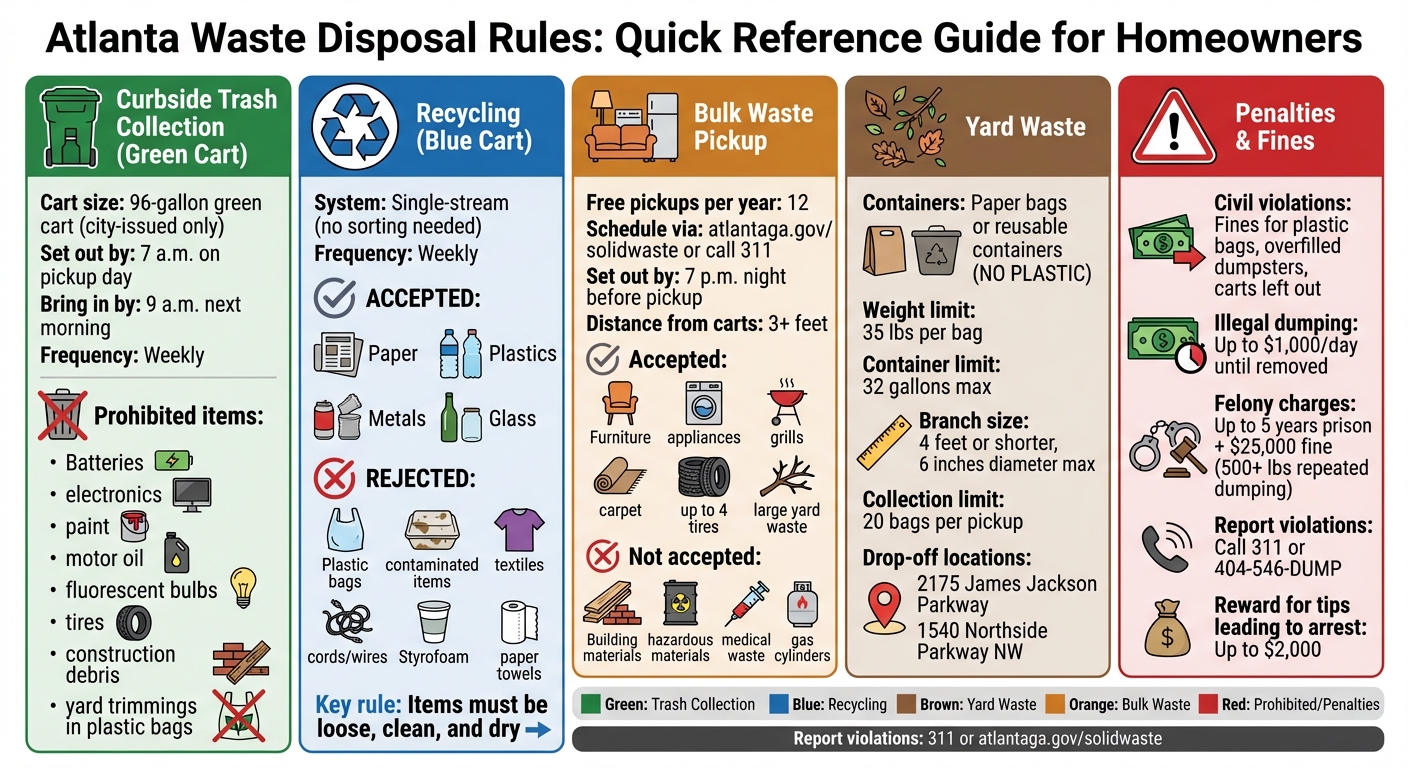
Atlanta Waste Disposal Rules Quick Reference Guide
Recyling Do's and Don'ts | Items to keep out of your blue bins
Curbside Trash Collection Rules
Atlanta provides residents with a 96-gallon green cart for weekly trash pickup. Using this cart correctly not only helps you avoid fines but also keeps your neighborhood tidy.
Trash Bin Size and Placement Requirements
The only bin permitted for use is the City-issued 96-gallon green cart. Place your cart at the curb by 7 a.m. on your scheduled pickup day - miss this deadline, and your trash won’t be collected until the following week. Once your trash has been collected, make sure to bring the cart back in by 9 a.m. the next day to avoid a citation. It’s also your responsibility to keep the cart clean and free of odors.
Proper placement and timely use of your cart are just the first steps. Knowing what can and cannot go into it is equally important.
What You Can Put in Curbside Trash
The green cart is meant exclusively for regular household waste. This includes items like food packaging, paper products, and non-recyclable plastics.
However, there are strict rules about what’s not allowed. The City prohibits hazardous materials such as batteries, electronics, paints, motor oil, and fluorescent light bulbs. You also cannot dispose of automotive parts (like tires), construction debris (such as lumber, concrete, or drywall), or yard trimmings in plastic bags. Additionally, items like compressed gas cylinders, needles, and waste left by contractors or after evictions must be handled through specialized disposal programs.
Make sure to separate these prohibited items and use the appropriate disposal methods to ensure compliance with City regulations.
Atlanta Recycling Rules and Best Practices
Atlanta uses a single-stream recycling system, which means all your recyclables go into one blue cart - no need to sort them beforehand. These carts are picked up weekly alongside your trash and taken to a Material Recovery Facility for sorting. However, improper preparation of recyclables can lead to contamination, causing entire loads to be rejected and sent to the landfill instead.
Taking the time to prepare and sort recyclables correctly helps Atlanta's system work smoothly and reduces the amount of waste ending up in landfills. Let’s break down what can and cannot be recycled in Atlanta’s program.
What Materials Can Be Recycled
The blue recycling carts in Atlanta accept a variety of materials, including paper, plastics, metals, and glass. Here’s a closer look at what you can recycle:
- Paper: Newspapers, magazines, mixed paper, and flattened cardboard.
- Plastics: Items like water bottles, soda bottles, laundry detergent bottles, shampoo bottles, milk jugs, yogurt containers, prescription bottles, and clamshell containers.
- Metals: Aluminum cans, steel or tin cans, aluminum foil, and empty aerosol cans.
- Glass: Bottles and jars.
To ensure these items are processed correctly, make sure they are loose, clean, and dry. Rinse out food or detergent containers and let them air dry. Remove lids and caps from bottles and jars, and avoid putting recyclables in plastic bags, as these can damage sorting machinery. Finally, place your blue cart in the correct spot for pickup, as outlined in the city’s guidelines.
Recycling Mistakes to Avoid
Certain items can ruin an entire load of recyclables, so it’s important to keep them out of your blue cart. Here’s what you should avoid:
- Plastic bags: This includes trash bags or any plastic used to contain recyclables.
- Contaminated items: Food waste, liquids, and greasy pizza boxes can spoil recyclable materials.
- Textiles and clothing: These are not accepted in the blue cart.
- Items that jam machinery: Cords, wires, chains, hoses, ropes, and hangers can damage equipment.
- Other prohibited items: Styrofoam, plastic cutlery, straws, bubble wrap, paper towels, tissues, metallic wrapping paper, hardcover books, and propane tanks.
- Hazardous waste: Items like biohazardous materials, diapers, and needles are strictly prohibited.
If you’re unsure whether something belongs in the recycling bin, it’s better to leave it out. Atlanta offers a helpful tool called the "Waste Wizard" to guide you in making the right disposal decisions.
How to Dispose of Bulky and Hazardous Waste
Some items, like oversized furniture or hazardous materials, can’t be left out with your regular trash. Fortunately, Atlanta has systems in place to handle these responsibly. Using these services not only keeps you in line with local regulations but also ensures the safety of sanitation workers and helps you avoid extra fees or fines.
Bulky Waste Pickup Options
Got an old couch, a broken washing machine, or a pile of yard debris too large for your trash cart? Atlanta's bulk trash pickup program can help. Eligible households are allowed 12 free bulk pickups per year. You can schedule a pickup by visiting atlantaga.gov/solidwaste or calling 311 (or 404-546-0311 if you're outside city limits).
To prepare for pickup, place your items at the curb by 7 p.m. the night before your scheduled date. Make sure the pile is neat and at least 3 feet away from trash carts or vehicles to allow safe access. The city accepts a variety of items, including:
- Furniture like sofas and mattresses
- Appliances such as refrigerators (with freon removal certification tags) and washers
- Barbecue grills, toilets, and carpet
- Flat glass (secured with duct tape or wrapped)
- Up to 4 tires
- Large yard waste piles (branches must be cut to 4 feet or shorter and no thicker than 6 inches in diameter)
However, certain items are not eligible for pickup. These include building materials (like drywall, brick, concrete, sheds, and fences), hazardous materials (such as paint, chemicals, or fuels), medical waste, pressurized gas cylinders, metal drums, and boats. If your items don’t qualify - or if you’ve used up your 12 annual pickups - you can hire a private junk removal service or use WasteMatch to connect with local haulers who offer upfront pricing and flexible scheduling.
For hazardous materials or items requiring special handling, follow the guidelines below.
Safe Disposal of Hazardous Materials
Hazardous items - like paint, batteries, chemicals, and some electronics - require careful disposal to protect public health and prevent environmental contamination.
- Batteries and mercury-containing bulbs: Use mail-back programs like WM's LampTracker® for safe disposal.
- Electronics: Drop off items such as computers, monitors, and mobile phones at the Beyond Surplus recycling center in Smyrna (1835 South Cobb Industrial Blvd SE #105, GA 30082). They accept these items free of charge and also take appliances like washing machines, dryers, and microwaves.
- Paint and chemicals: Contact the City of Atlanta's Solid Waste Services to find approved drop-off locations or learn about special collection events. You can call ATL311 at 404-546-0311 for detailed instructions.
It’s important to handle hazardous materials responsibly. Never pour chemicals down the drain or leave them at the curb - this is not only dangerous but also illegal.
If you need help with items that fall outside city services, WasteMatch can connect you with licensed haulers who specialize in safe disposal, recycling, and donation. They make the process quick and hassle-free, ensuring your waste is handled the right way.
sbb-itb-c7714ed
Yard Waste and Landscape Debris Disposal
If you're in Atlanta, handling yard waste like grass clippings, leaves, and branches comes with a set of clear rules. Following these not only keeps your property in line with city requirements but also supports local green waste initiatives.
Stick to the right containers. Use approved paper bags or reusable containers for your yard waste. Each bag should weigh no more than 35 pounds, and containers should hold no more than 32 gallons. Avoid using plastic bags - they aren’t allowed. For branches, make sure they’re cut down to 4 feet or shorter and no thicker than 6 inches.
Be aware of collection limits. The city will collect up to 20 bags of yard waste per pickup. If you have more than this or branches that exceed the size limits, you’ll need to schedule a bulk pickup online or by calling 311.
Drop-off sites for larger loads. If you’re dealing with a significant amount of yard debris, you can take it to one of the city’s drop-off locations: 2175 James Jackson Parkway or 1540 Northside Parkway NW.
Fines and Penalties for Breaking Disposal Rules
Breaking waste disposal rules in Atlanta can lead to hefty fines and even criminal charges. The city's Solid Waste Education Enforcement Team (SWEET) is dedicated to enforcing sanitation laws, addressing everything from misplaced trash bins to illegal dumping. These penalties highlight the city's commitment to keeping neighborhoods clean and orderly.
Civil penalties apply to common violations like using plastic bags for yard waste, overfilled dumpsters, or leaving trash carts out for too long. Illegal dumping carries steeper consequences, with fines reaching up to $1,000 per day until the waste is removed. Serious offenses, such as dumping hazardous materials or over 500 pounds of waste repeatedly, can escalate to felony charges. These carry penalties of up to five years in prison and fines as high as $25,000. Even smaller illegal dumping incidents, classified as misdemeanors, come with significant repercussions, including community service, reimbursement for city cleanup costs, and possible car impoundment.
Some violations are more common than others, like leaving containers in the right-of-way or using plastic bags for yard trimmings. These infractions appear on the city's "Top Ten Violations" list and are enforced promptly, often resulting in fines. Businesses working under city contracts face additional risks, such as contract termination, if caught illegally dumping.
To steer clear of these penalties, it’s crucial to follow the rules: put out carts on schedule, use approved containers for yard waste, arrange bulk pickups ahead of time, and avoid dumping waste on roadsides or vacant lots. If you see illegal dumping, report it through ATL311 by dialing 311 or 404-546-0311, or call the illegal dumping tip line at 404-546-DUMP. Tips that lead to arrests can earn you up to $2,000. By staying compliant, you contribute to a cleaner, healthier Atlanta.
Simplify Waste Removal with WasteMatch
WasteMatch helps Atlanta homeowners connect with local haulers for junk removal, bulky waste pickup, and responsible disposal. Whether you're clearing out a cluttered basement, getting rid of old furniture, or managing debris from a renovation, the platform makes finding reliable help straightforward.
Forget the hassle of comparing services - WasteMatch gives you upfront pricing and the option to book same-day service or schedule a pickup that works for you. They handle all the scheduling and coordination, so you don’t have to.
Every hauler on the platform prioritizes responsible disposal, recycling materials, donating usable items, and using approved facilities. Payments are securely processed only after the job is done. This efficient service lets you focus on your home while helping to keep Atlanta tidy.
If you’re balancing a packed schedule or dealing with oversized items that curbside pickup won’t take, WasteMatch offers a faster, easier solution. Skip the weeks-long wait for city bulk pickup or the risk of fines for improper disposal. With just a few clicks, your unwanted items are gone.
Conclusion
Sticking to Atlanta's waste disposal rules goes beyond just dodging fines - it’s about contributing to a cleaner community, safeguarding public health, and aligning with the city’s broader environmental efforts. These rules are here to simplify your daily waste management routine.
Make sure to use your city-issued green and blue carts properly, keep recyclables clean and dry, and take advantage of the 12 free annual bulk pickups through ATL311. Follow approved practices: skip plastic bags for yard trimmings, avoid tossing hazardous materials in curbside bins, and separate items correctly. For hazardous household waste - like chemicals, batteries, paint, and electronics - drop them off at specialized facilities such as the Center for Hard to Recycle Materials (CHaRM), though keep in mind there may be fees involved.
If you’re dealing with items that fall outside standard services, like oversized furniture or construction debris, WasteMatch can be a great option. They connect you with reliable local haulers who provide upfront pricing, flexible scheduling, and environmentally responsible disposal.
FAQs
What items should not be placed in Atlanta's curbside trash or recycling bins?
Atlanta has clear guidelines on what belongs in curbside trash and recycling bins to maintain effective waste management. Items like hazardous materials (such as paint, batteries, or chemicals), electronics, construction debris, and large items like furniture or appliances are not allowed. Additionally, plastic bags, food waste, and non-recyclable plastics should never go into recycling bins.
For items like hazardous or bulky waste, you can use designated drop-off points or arrange for special collection services. Be sure to review Atlanta's waste disposal rules to stay within regulations and avoid fines.
How do I arrange a bulk waste pickup in Atlanta?
To arrange a bulk waste pickup in Atlanta, you can either call the city’s 311 service at 404-546-0311 or submit a request online through the Atlanta 311 portal. Residents are allowed up to 12 bulk pickups per year.
Before the scheduled pickup, gather items like old furniture or appliances and have them ready for curbside placement. On the pickup day, make sure to set them out no earlier than 7 p.m. the night before and no later than your confirmed collection time to avoid any penalties.
When making your request, provide accurate details such as your address, a brief description of the items, and your preferred pickup date. This ensures the process runs smoothly and keeps you in line with Atlanta’s waste disposal guidelines.
What are the consequences of improper waste disposal in Atlanta?
Improper waste disposal in Atlanta comes with steep consequences. Homeowners could be fined as much as $1,000 per day until the waste is cleared. On top of that, there might be extra penalties, such as mandatory community service, paying back city cleanup costs, or even having your vehicle impounded.
To steer clear of these penalties, it’s crucial to stick to Atlanta’s waste disposal guidelines. Make sure your trash, recycling, and hazardous materials are managed the right way.